


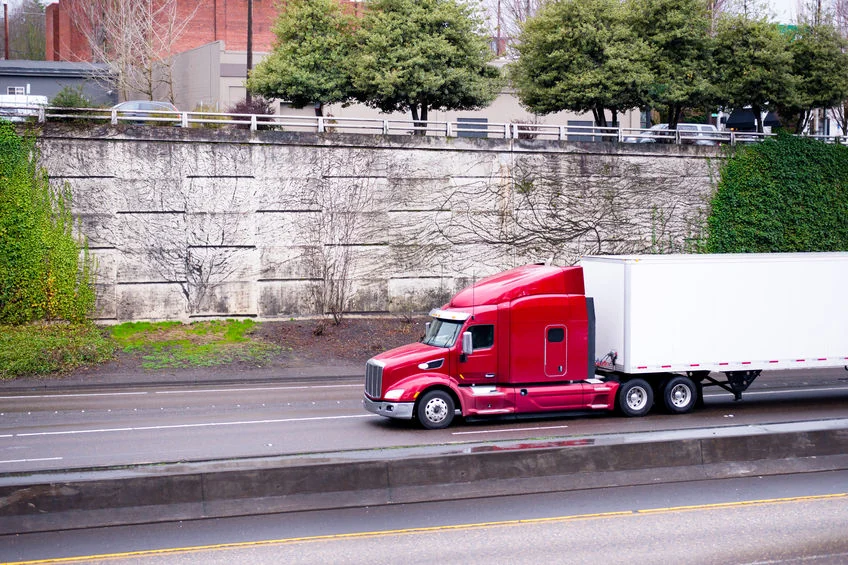
Truck underride accidents happen when a smaller vehicle travels partly or substantially beneath a truck or trailer. The trailer can intrude into the passenger compartment, making the contact point, height difference, and protective equipment important to the investigation. A rear-end truck collision is not automatically an underride crash, and the crash type alone does not establish fault.
Rear vs. Side Underride: What Changes in the Investigation?
| Impact type | What investigators examine | Evidence to preserve | Question the evidence can help answer |
|---|---|---|---|
| Rear underride collision | The smaller vehicle’s front passes beneath the truck or trailer’s rear; contact may be centered or offset. | Rear impact guard, mounting points, welds, fasteners, corrosion, certification labels, vehicle damage, and approach data. | Where did the vehicle contact the rear, how did the guard respond, and what contributed to intrusion? |
| Side underride crash | The smaller vehicle enters beneath the trailer’s side, potentially during a crossing, turn, or other vehicle movement. | Trailer side structure, any protective device, lights, conspicuity tape, road geometry, vehicle paths, and video. | Was the trailer detectable in time, how did the vehicles’ paths intersect, and what structures were contacted? |
| Either impact type | Crash causation and the mechanisms producing injury require separate attention. | Both vehicles, scene measurements, available electronic data, inspection records, medical evidence, and witness accounts. | Which conduct or equipment condition caused the collision or contributed to the injuries? |
Kevin A. Adamson, P.C. impact-type and evidence matrix. Prepared and sources checked November 10, 2026. This original investigative synthesis draws on NHTSA’s national rear and side underride research, including its March 2013 research report, and the federal requirements discussed below. It compares mechanisms and evidence; it does not report Georgia crash rates.
Key Takeaways
- Rear and side underrides call for different measurements, equipment inspections, and visibility analysis.
- Preserve the tractor, trailer, passenger vehicle, guard components, lighting, reflective material, and available electronic records before their condition changes.
- Rear impact guard requirements depend on the vehicle and applicable manufacturing standards. Side-guard rulemaking should not be confused with a universal federal equipment mandate.
- National underride figures have documented reporting limitations. They cannot establish how a particular Georgia crash occurred.
- A preservation request should identify the evidence and its custodians promptly; routine recordkeeping periods are not safe waiting periods.
What Makes an Underride Crash Different?
A truck’s cargo body or trailer may sit above important energy-absorbing structures at the front of a passenger vehicle. In an underride, the interaction can allow the larger vehicle’s structure to enter the smaller vehicle’s occupant space. Investigators may describe that as passenger compartment intrusion.
The analysis requires more than a photograph showing severe front-end damage. Relevant details can include trailer height, suspension and load condition, road slope, braking, vehicle pitch, contact location, and the sequence of impacts. The condition of the passenger compartment also needs to be documented separately from the vehicle’s final resting position.
Families do not need to identify the exact mechanism themselves. A qualified reconstruction or engineering examination can help distinguish underride from other truck-crash damage patterns.
What NHTSA’s National Research Shows—and What the Counts Mean
Data year: 2017. Scope: United States fatal-crash records reviewed by NHTSA. In its April 2023 side-underride rulemaking notice, NHTSA described reviewing 184 relevant police crash reports from the 2017 Fatality Analysis Reporting System files. It identified 92 side-underride crashes, compared with 52 recorded as underrides in FARS. Within those reviewed cases, it identified 105 light-passenger-vehicle fatalities in underride crashes, compared with 59 recorded that way in FARS.
Those are findings from a particular review of national fatal-crash records, not a complete census of all underride crashes, a current annual total, or a Georgia estimate. The notice was published in 2023; the reviewed crash records were from 2017. A missing underride designation in a police report therefore does not, by itself, resolve the physical mechanism of an individual crash.
Rear Underride: Guard Condition, Geometry, and Applicable Standards
A rear impact guard is the structure extending across the lower rear of many trailers. Its horizontal member, supports, and connections should be examined together. A guard can remain attached after a crash while its response still warrants analysis; a damaged guard after impact does not automatically prove a defect existed beforehand.
49 CFR § 393.86 addresses rear impact guards and rear-end protection. For covered trailers and semitrailers manufactured on or after January 26, 1998, it links the requirements to FMVSS Nos. 223 and 224 in effect when the vehicle was manufactured. Weight thresholds and specified vehicle exceptions matter.
NHTSA’s 2022 rear impact protection rule strengthened standards for newly manufactured trailers and semitrailers, addressing specified centered and 50-percent-overlap impacts at 35 mph. These are specified performance conditions, not a promise that every guard will prevent every real-world underride. A case involving an older trailer must be evaluated under the standards applicable to that equipment.
Preserve the guard’s dimensions and identification markings, the trailer’s build date and VIN, repairs and replacement history, and evidence of the actual contact location. An investigator may need to distinguish impact deformation from preexisting corrosion, a prior repair, or a mounting problem.
Side Underride: Visibility, Vehicle Paths, and Side Protection
A nighttime side impact may raise questions about a trailer crossing traffic, turning, backing, or occupying part of a roadway. Investigators should examine the actual maneuver and the approaching driver’s opportunity to perceive and respond to the trailer.
Relevant evidence includes side-marker lamps, reflective devices, red-and-white conspicuity material, electrical connections, dirt or damage, nearby lighting, weather, and sight lines. 49 CFR § 393.11 sets out applicable lamp, reflector, and conspicuity requirements, with requirements varying by vehicle characteristics and manufacture date.
As of the November 10, 2026 source check, the federal side-underride guard initiative remained listed at the prerule stage. The 2023 advance notice sought comments and reported research; it did not itself impose a universal side-guard requirement. The absence of a side guard alone does not prove a regulatory violation or settle a Georgia liability claim.
Preserve any side protective equipment actually installed. An aerodynamic side skirt should not be assumed to provide the structural protection of an underride guard. Its design, attachment, and intended function require examination.
What Evidence Should Be Preserved After an Underride Crash in Georgia?
Preserve the tractor, trailer, passenger vehicle, guards and mountings, lights and reflective material, scene photographs, video, available vehicle and telematics data, inspection and repair records, driver-duty records, and medical evidence. Identify who controls each item and seek preservation before repairs, disposal, or automatic data deletion change what is available.
1. Both Vehicles, the Trailer, and Detached Components
The tractor and trailer may have different owners, identification numbers, storage locations, and insurers. Record each separately. Preserve the passenger vehicle as well: roof and windshield damage, seat and restraint condition, crush patterns, and data modules may be important to the injury analysis.
Ask counsel to address access, joint inspections, photographs, measurements, and any proposed destructive testing. Keep detached guard pieces, fasteners, lamps, and other relevant components with documented identification and custody. Avoid personal inspection beneath unstable equipment or in a salvage area.
2. Scene Evidence and Original Video
Useful material may include police photographs and diagrams, body-camera footage, 911 records, dashcam video, nearby business cameras, traffic cameras where footage exists, witness contact information, and photographs of debris or tire marks. Preserve original files and available timestamps rather than relying only on cropped screenshots or social-media copies.
Visibility analysis may require reconstruction of the driver’s viewpoint, illumination, contrast, approach angle, weather, and timing. A phone photograph taken later in daylight does not reliably reproduce what an approaching driver could see at night.
3. Available Electronic Data in Its Usable Form
Potential sources include engine-control or crash-event modules, fleet telematics, GPS, onboard cameras, dispatch communications, and the passenger vehicle’s event data recorder. What exists, what it records, and how long it remains available depend on the equipment and service.
An electronic logging device principally documents duty-status information; it should not be assumed to contain the same crash-event data as an engine or event-recording module. Preserve relevant native files, metadata, system details, and cloud records where available. Qualified extraction helps avoid changing or overwriting evidence.
4. Inspection, Maintenance, and Trailer History
Request relevant trailer inspection records, defect reports, repair certifications, guard replacements, welding or fabrication records, lighting repairs, and prior photographs. Annual inspection documentation should be considered alongside the records of work actually performed.
These materials can help establish notice, maintenance responsibility, and the equipment’s earlier condition. A completed inspection form is not a substitute for examining the trailer and the scope of that inspection.
5. Medical Evidence, Driver Activity, and Carrier Operations
Medical records, rescue documentation, and appropriate expert analysis can help connect intrusion and other forces to the injuries. Preserve available dispatch instructions, duty-status records, trip documents, and communications relevant to the maneuver and driver activity. Request evidence based on the issues in the crash rather than assuming fatigue, distraction, or an equipment defect occurred.
Why Evidence Requests Should Not Wait for the Lawsuit Deadline
Different records have different retention requirements, and camera or electronic data may be overwritten much sooner than paper records. Examples for covered operations include:
| Record category | Federal retention provision | Practical preservation point |
|---|---|---|
| Required driver vehicle inspection reports and associated repair/review certifications | Three months under 49 CFR § 396.11(a)(4). | Preserve existing reports and certifications promptly. The rule does not require every property-carrying driver to create a no-defect report every day. |
| Required driver records of duty status and supporting documents | At least six months from receipt under 49 CFR § 395.8(k)(1). | Identify the carrier and relevant electronic provider; request the underlying available records. |
| Periodic inspection reports | Fourteen months from the report date under 49 CFR § 396.21(b)(1). | Request the actual report identifying the vehicle, components inspected, inspector, and results. |
These regulatory periods are not permission to discard evidence when a legal preservation duty applies, and they are not waiting periods for injured people. Counsel can identify evidence custodians, send focused preservation demands, arrange inspections, and use formal legal processes when needed. Families should also preserve their own relevant vehicles, files, messages, and records.
Worked Example: A Hypothetical Nighttime Side Impact
Suppose a tractor-trailer turns across a road after dark and a passenger car strikes the trailer’s side. The car’s front moves beneath the trailer and its passenger compartment is damaged. This is a hypothetical investigation, not a KAAPC case result or a conclusion about fault.
| Issue to test | Evidence to obtain | What still needs to be resolved |
|---|---|---|
| Trailer visibility | Original video, contemporaneous photographs, reflective material, weather, and scene lighting measurements. | When could the approaching driver reasonably detect the trailer in the actual conditions? |
| Lighting | Side-marker lamps, wiring and connectors, inspection reports, and relevant repair history. | Were applicable lights operating before impact, and did a failure affect detection? |
| Vehicle paths and timing | Road measurements, sight lines, video, available vehicle data, and witness accounts. | How long did the trailer occupy the lane, and what response opportunities did each driver have? |
| Guard or side-equipment condition | Installed equipment, mounting points, identification, damage, build information, and prior repairs. | What protection was present, what rules applied, and did a design or condition contribute to intrusion? |
| Inspection evidence | Trailer-specific defect reports, periodic inspections, work orders, and photographs. | Who inspected or maintained the relevant equipment, what was known, and what work was performed? |
The same evidence could support different conclusions. It might identify a hazardous truck maneuver, an approaching-driver issue, a visibility problem, an equipment contribution to injury severity, or several contributing causes. The side-impact label cannot answer those questions.
Who May Be Liable for a Truck Underride Accident in Georgia?
Potential responsibility depends on the evidence connecting conduct or a defect to the crash and injuries. An investigation may examine the truck driver, motor carrier, trailer owner, maintenance provider, manufacturer, other motorists, or another party with a legally relevant role. Ownership or involvement alone does not establish liability.
A guard investigation can concern the injuries produced by a collision even when it does not explain why the vehicles initially collided. The team may need to distinguish a preexisting defect from damage caused by the crash and evaluate which entity controlled design, inspection, maintenance, or repair.
Georgia’s apportionment statute, O.C.G.A. § 51-12-33, addresses allocation of fault and bars recovery when a plaintiff is 50 percent or more responsible for the injury or damages claimed. How that framework applies requires attention to the claims and facts. Neither striking a trailer from behind nor striking its side automatically resolves comparative responsibility.
For the broader claims process, visit KAAPC’s Georgia truck accident representation page. This article focuses on underride-specific evidence rather than estimates of settlement value.
What Should Families Do First?
Prioritize emergency care and follow the instructions of responders. If it is safe, identify the tractor and trailer, photograph visible identifiers, and obtain witness details. Do not enter traffic, approach unstable vehicles, or crawl under equipment to collect evidence.
Promptly give counsel the crash location and time, report number, vehicle and trailer information, storage-yard details, and any known video sources. Avoid authorizing disposal or major repairs before preservation needs are reviewed. Our guide to surveillance footage in a Georgia accident claim explains related video issues.
O.C.G.A. § 9-3-33 generally provides a two-year limitation period for personal injury actions after the claim accrues. Exceptions, other claims, and government notice requirements can change the analysis. An insurance discussion or ongoing investigation should not be assumed to extend a filing deadline. Evidence preservation should begin much earlier.
Ask KAAPC to Investigate the Trailer, Carrier, and Insurance
After a serious underride crash, Kevin A. Adamson, P.C. can assess the trailer and carrier evidence, potential responsible parties, and available insurance. Early review can help coordinate preservation requests and qualified inspections while the vehicles and records remain available.
Contact KAAPC for a free consultation or call 404-581-9100. Explain where the crash occurred, whether it involved the trailer’s rear or side, and where the vehicles are being held so the team can evaluate the next steps.
Frequently Asked Questions
Is Every Rear-End Truck Crash an Underride Accident?
No. An underride involves the smaller vehicle moving beneath the truck or trailer. Contact geometry, damage patterns, and measurements help determine whether that occurred and whether the passenger compartment was intruded upon.
Does Underride Guard Failure Automatically Prove Negligence?
No. Investigators must examine applicable standards, impact conditions, the guard’s earlier condition, installation and maintenance, and causation. Post-crash damage alone does not establish a pre-crash defect or identify the responsible party.
Are Side Underride Guards Required on Every Trailer?
No universal federal side-guard requirement was established by the sources reviewed for this article on November 10, 2026. The federal initiative remained at the prerule stage. Other equipment requirements and the facts of the crash still need review.
What Evidence Matters Most After an Underride Crash?
Priorities include the vehicles and trailer, guard components, lights and conspicuity material, original video, available electronic data, scene measurements, inspection and repair records, and medical evidence. The impact location and disputed issues determine which examinations are most important.
Can My Lawyer Obtain the Truck’s Black-Box Data?
Potentially, if relevant data exists and access can be arranged or obtained through legal process. The recording system, vehicle, data owner, and overwrite behavior matter. Prompt preservation and a qualified download can be important.
What If the Crash Report Does Not Mention Underride?
That omission does not settle the issue. NHTSA has documented underreporting in national crash records. Photographs, vehicle examinations, rescue information, and reconstruction may help establish what occurred in the individual case.
